Failed Rain Barrels → Compost Barrels
Two barrels that never became a rain collection system find a better purpose. A first attempt at composting — documented honestly.
Project Log
From Rain Barrels to Compost Barrels
The original plan was two rain barrels along the back of the garage, feeding a garden through gravity. That pivoted to a bucket garden, which left two large barrels sitting around doing nothing. I've always wanted to compost but never knew where to start. Turns out the barrels were already halfway there.
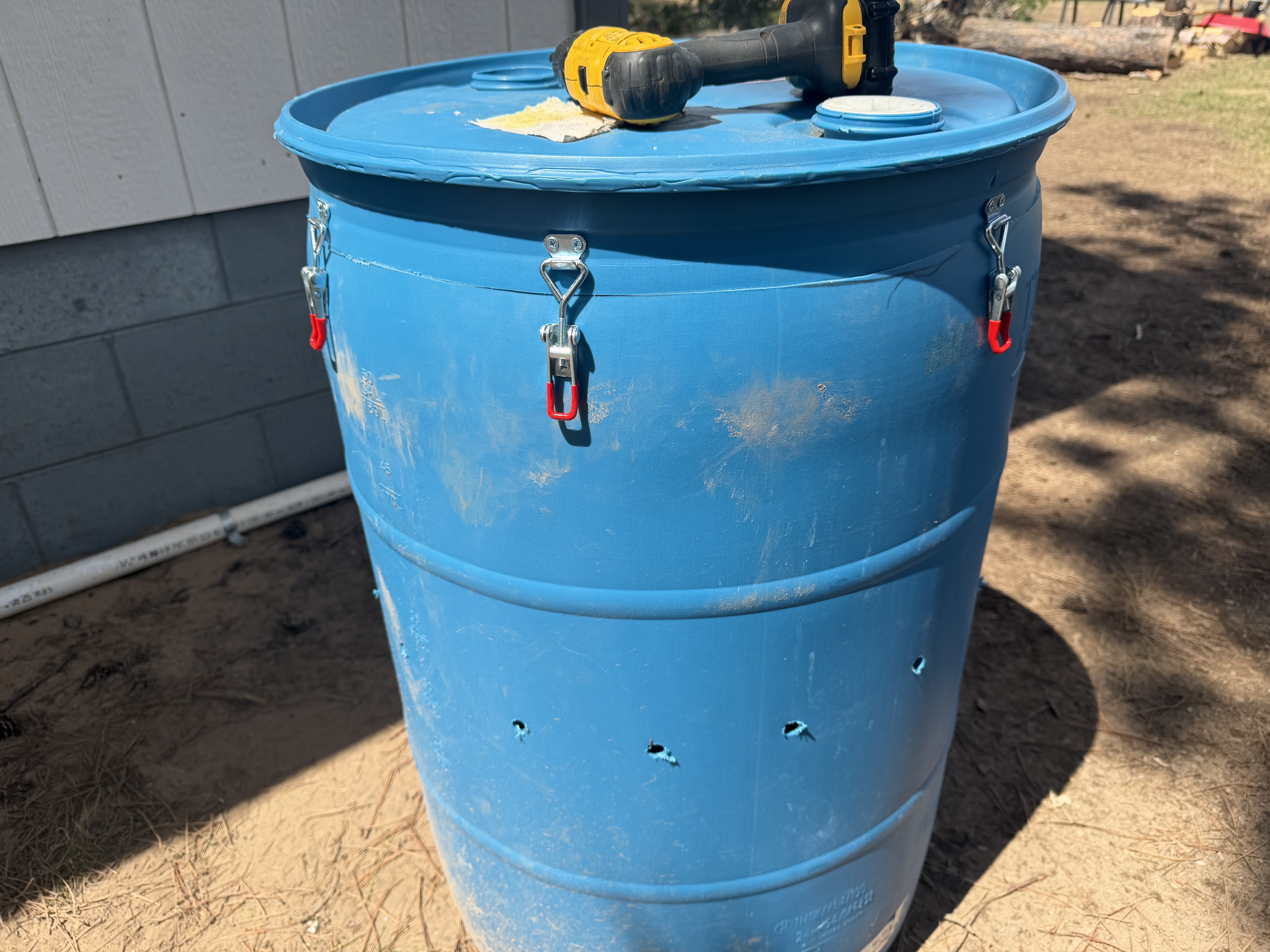
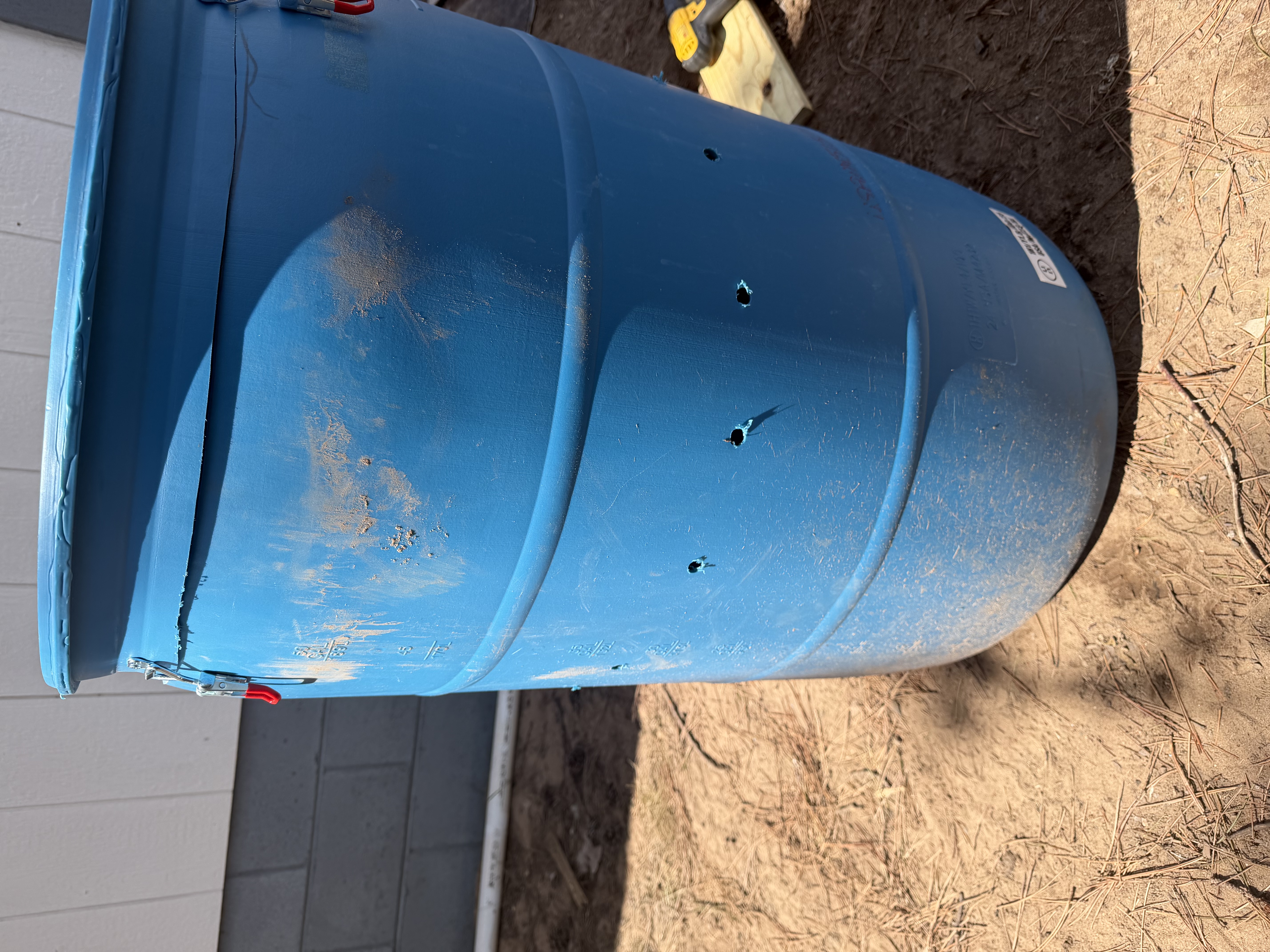
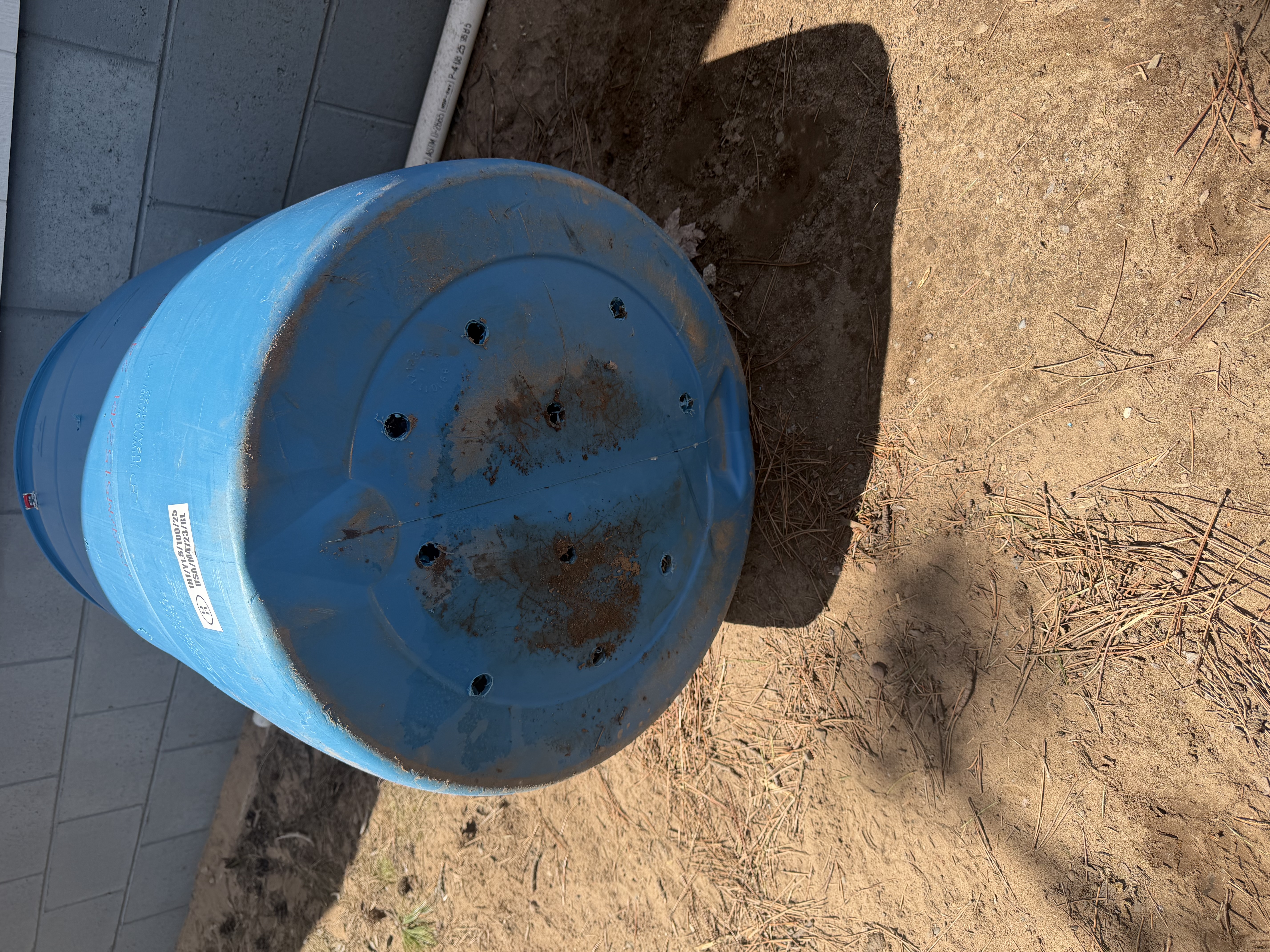
The conversion was straightforward: 10 holes drilled in the bottom for drainage, and 10 more holes in a ring around the outside for aeration. The lids clamp on and off — important for keeping pests out when food scraps go in, and for easy access on turn day.
Barrel 1 is the active barrel — scraps go in here weekly. Once it's full, it gets left alone to finish composting while Barrel 2 becomes the new active barrel. By the time Barrel 2 is full, Barrel 1 should be ready to use. Continuous output, no waiting.
How Barrel 1 is Layered
Starting from the bottom up:
- Base layer: Small sticks and pine needles — allows drainage and airflow off the bottom
- Brown layer: Last fall's leaves — carbon material to balance the food scraps
- Green layer: Food scraps (coming once the clamps arrive)
- Fruit and vegetable scraps
- Coffee grounds and filters
- Eggshells
- Dry leaves
- Grass clippings
- Cardboard (torn small)
- Meat and fish
- Dairy products
- Oily or greasy food
- Cooked food with sauces
- Pet waste
Barrel 1 is layered and ready. Clamps are on — lid is secured. Food scraps start next. Weekly Sunday stirring reminder is set.